Sample No. 0069
Google Health 5.10 Adds Japan Rhythm Alerts, Sleep-Based Readiness and Chat Log Deletion
Google Health 5.10 expands heart rhythm notifications in Japan, adjusts Readiness Score with more sleep signals and lets users delete coach logs by chat.
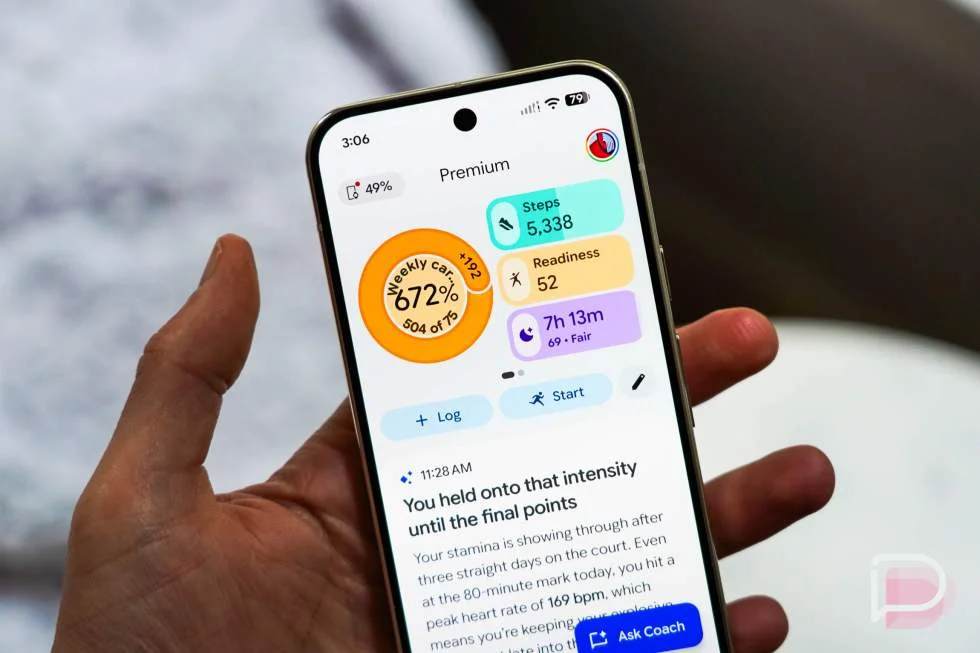
Google Health 5.10 makes three targeted changes to the app: heart rhythm notifications reach users in Japan, Readiness Score draws on more sleep signals, and the Health Coach can delete certain entries when asked. The update is rolling out on iOS and Android, with availability expected to begin today.
The changes have different audiences. Japan is the only new market named for Irregular Rhythm Notifications, while the Readiness Score and chat-based deletion changes address broader app features. For users, the most practical shift may be the last one: correcting a mistaken workout or meal entry becomes a conversational request instead of a manual search through logs.
Heart rhythm notifications expand to Japan
Irregular Rhythm Notifications are now available in Japan on supported Pixel Watch and Fitbit devices. The feature checks heart rhythm data in the background while a user is still or sleeping, looking for signs of atrial fibrillation, commonly shortened to AFib. Users can set it up from the Health tab in the Google Health app.
That background operation is central to how the feature is meant to work: it examines data gathered during periods of rest rather than requiring someone to start a dedicated check each time. The update does not describe a change to the detection method, nor does it provide new performance figures. It extends availability to another country, with device support still dependent on the compatible hardware listed in Google’s Help Center.
For people already using a Pixel Watch or Fitbit device, the practical next step is to check whether their model supports the feature and whether it appears in the app’s Health tab. The feature checks for signs of AFib; the update does not say that it diagnoses a condition. That distinction matters when interpreting a health notification: an alert is a prompt to seek appropriate follow-up, not a clinical conclusion supplied by the app.
Readiness Score adds sleep signals
Google says Readiness Score will now use additional signals from sleep to provide a more personalized result. The announcement does not identify which signals were added, how they are weighted, or how much the score may change for an individual. It also gives no scoring formula or comparison with the previous version.
That leaves the update’s effect difficult to predict from the release description alone. A score built from more sleep information could respond differently to a user’s recorded rest, but the source does not specify whether the change affects the score’s range, its interpretation, or the recommendations shown alongside it. Users who track the score over time may notice a shift after the update, though Google has not said to expect one specific pattern.
For teams evaluating health and fitness software, the useful question is whether the extra inputs make the score more relevant to the person using it. More signals do not, by themselves, show that a measure is more accurate or more useful. Google’s description frames the change as personalization, but the announcement offers no validation details or examples of how the revised score behaves. Those details would help users understand what has changed in practice.
Coach chat can remove daily entries
The Health Coach can now delete daily entries that users logged through the coach. A user can ask it to remove a workout, meal, weight entry or symptom record, using an instruction such as “Delete the run I logged this morning.” The capability is aimed at correcting routine logging mistakes through the same chat interface used to create the entry.
This is a small interface change with a clear practical benefit: users can describe the item they want removed instead of navigating to it manually. The announcement does not explain how the coach handles requests when several entries match the description, whether it asks for confirmation, or whether deleted entries can be restored. Those mechanics will determine how comfortable users feel relying on chat for corrections, especially when they have logged several similar activities in one day.
Medical records are excluded from this deletion feature. The stated scope is limited to daily entries logged with the Health Coach, including workouts, meals, weight and symptoms. Users should therefore expect the chat request to work only for those kinds of coach-created entries, rather than treating it as a general tool for removing health information from the app.
Availability and what to watch
Google Health 5.10 is rolling out on both iOS and Android. The source says the update should be available as early as today, but it does not give a country-by-country schedule or a date when the rollout will finish. Users can check the app stores for the update: Google Play and the App Store.
The release is mostly incremental: one regional expansion, one adjustment to a score, and a simpler way to manage coach logs. The next useful details to watch are the compatible device list for Japan, clearer explanations of the sleep inputs behind Readiness Score, and how the coach handles ambiguous or mistaken deletion requests. Google’s update notes describe the changes, while the original report covered the release.