Sample No. 0065
Google Messages Adds Cloud and On-Device AI Scam Checks
Google’s opt-in message analysis and on-device link checks target different scam signals, with availability varying by device.
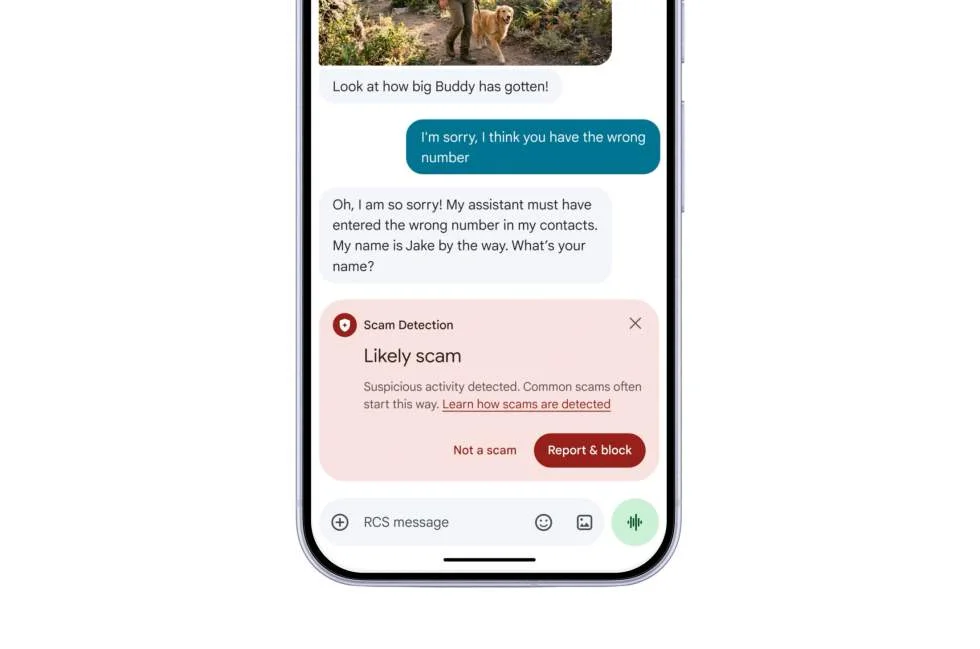
Google is adding two distinct AI checks to Android’s scam defenses: an opt-in feature that examines suspicious message conversations using cloud models, and on-device analysis of unfamiliar links with Gemini Nano. The split matters. One feature looks for intent across a conversation; the other assesses a web address that may be too new to appear in existing checks.
Neither feature makes every suspicious message or link safe to open. Google hasn’t provided detection rates or explained how often the checks will run. For users, the practical changes are an optional conversation analysis tool on a range of phones and a separate link check limited to newer devices.
Conversation context is the new signal
The expanded Scam Detection for Google Messages is designed to examine conversations with unknown senders. Google says its cloud Gemini models can assess complicated message context and infer whether a sender is attempting a scam, including a gradual approach that may not look suspicious in any single message.
That is a different problem from spotting a known scam phrase. A message-by-message filter can miss an exchange where the sender builds trust, changes the subject, and only later asks the recipient to take a risky step. Looking at more of the conversation may help identify that pattern. The potential benefit depends on how well the model interprets context, and the company hasn’t shared evidence showing how reliably it does so.
The feature is called Scam Detection enhanced with Private AI Compute. Google says Private AI Compute encrypts and processes information in a secure, dedicated environment. That description addresses how the cloud analysis is handled, but the announcement doesn’t spell out details such as how long conversation data is retained, which portions are sent for processing, or what controls users have over that data. Those details will matter to people deciding whether to enable it.
Use is optional: people will need to turn the feature on after it becomes available. Google says the rollout should begin in the coming weeks. That timing describes the start of a rollout, not a date when every supported phone will receive the feature.
Availability depends on the phone
The conversation feature is listed for Pixel 6 and newer, including the Pixel 11 series; Galaxy S24 and newer; Galaxy Z Fold 6 and Flip 6 and newer; and other Android devices with AICore. That leaves a broad range of eligible hardware, though the announcement doesn’t identify every qualifying model or explain whether support depends on regional availability.
For teams supporting a mix of Android phones, the device list is worth checking before assuming the same protections apply to everyone. The feature also requires an opt-in step, so an eligible handset won’t necessarily be using the conversation analysis unless its owner enables it.
Gemini Nano checks unfamiliar links on device
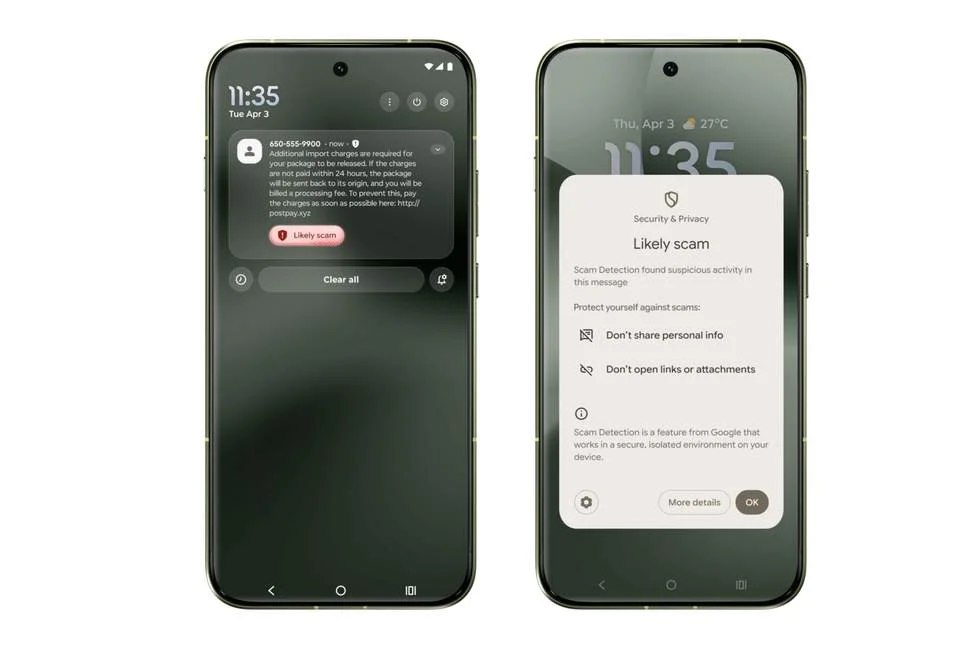
The second change concerns links rather than conversation history. Through Enhanced Protection, Google plans to use Gemini Nano on the device to evaluate unfamiliar links for possible scams. The idea is to assess a web address that may be new enough to evade earlier checks. Scammers can create fresh sites for new attempts, so a system that considers the link itself could catch some risks that a database of previously identified addresses misses.
Running this analysis on the phone means the link check uses on-device Gemini Nano, while the message feature described above relies on cloud models. They are separate mechanisms, with different hardware requirements and different inputs. The source doesn’t say whether link analysis examines the page after it opens, what signals Gemini Nano uses, or how it handles links that lead through several redirects.
When Enhanced Protection identifies a scam link, Google is also redesigning the warning. The new notices are intended to provide clearer context and give people more time to reconsider before opening the link. That could make a warning more useful at the moment of decision, though its value will depend on how clearly it explains the concern and whether it appears before the risky action.
Link checking has a narrower device list than conversation analysis: Pixel 10 and newer, the Galaxy S26 series, and Galaxy Z Fold 8 and Flip 8. Owners of older supported phones may get the conversation feature without the Gemini Nano link check. Google hasn’t described a way to bring this on-device analysis to phones outside that list.
What to watch as the rollout starts
The two additions address a real gap in scam detection: suspicious behavior can unfold over multiple messages, while harmful destinations can change faster than lists of known sites. Combining contextual analysis with on-device link review gives Android a wider set of signals to work with. The announcement, however, doesn’t include comparative results, so it’s too early to judge how much either feature reduces missed scams or incorrect warnings.
For users, the useful next steps are straightforward: check whether the device supports each feature, decide whether to enable conversation analysis, and read link warnings before proceeding. For practitioners, the rollout will be more informative if Google later explains the data handling behind Private AI Compute, the limits of Gemini Nano’s link checks, and how the tools behave when a message thread or destination is ambiguous. Those details will show whether the added analysis is useful in everyday use, beyond the promise of a broader scan.
Read the original post: Google Messages Update: Super Scam Detection Just Arrived