Sample No. 0018
Meta’s 2026 AI Network: Liquid-Cooled 102.4T Switches, FPF and Ethernet Scale-Up
Meta’s new network designs span liquid-cooled 102.4T switches, multiplane GPU fabrics and Ethernet scale-up, with open software and interfaces.
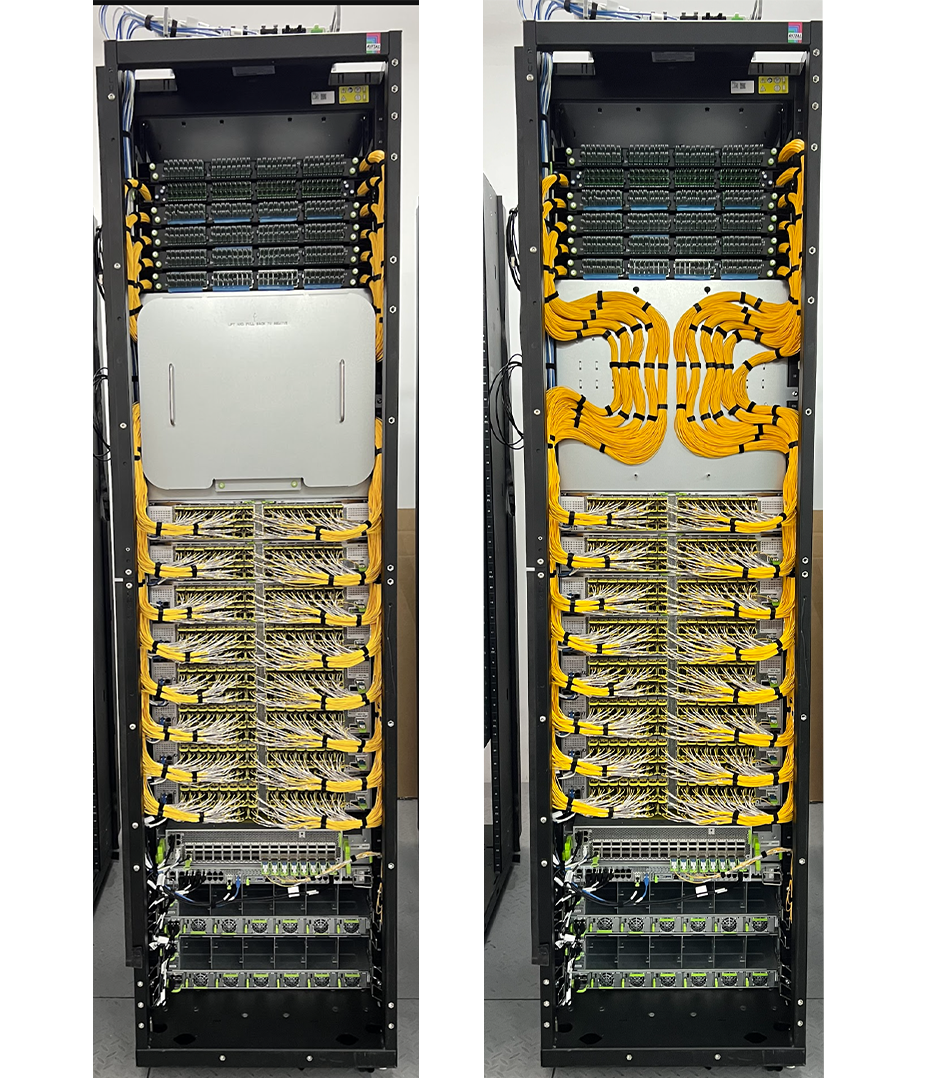
Meta’s 2026 networking plans address a problem that grows with AI clusters: adding accelerator capacity means rethinking the fabric, cooling, transport and hardware interfaces around it. At the Open Compute Project (OCP) Global Summit, the company is presenting designs that span liquid-cooled 102.4 Tbps switches, a multiplane GPU network, regional aggregation and Ethernet links between accelerators. The practical thread is consistency: Meta wants open software and shared specifications to make these systems easier to operate across hardware generations and facilities.
Several pieces build on work shown at OCP 2025, when Meta introduced new scale-out fabrics and helped start Ethernet for Scale-Up Networking (ESUN). This year’s scope reaches further into the stack. It includes Meta’s first liquid-cooled network rack, the Flattened Planar Fabric (FPF), an Ethernet scale-up switch for its MTIA 300 accelerators, the MetaRoCE transport protocol, and the Open Switch Platform Architecture (OSPA), a new OCP effort to standardize switch platform interfaces.
These technologies support workloads including Meta’s Muse Wonder and Muse Spark models, as well as Muse, its personal AI agent. The designs are at different stages: some are already in use, while others are previews or standards work still in progress.
More bandwidth in a liquid-cooled rack
The IcePack rack and IceCube switches address the power and thermal constraints that accompany higher network capacity. IcePack is Meta’s first liquid-cooled network rack, built to the OCP ORV3-HPRv1 rack standard. It houses IceCube switch blades, each providing 102.4 Tbps of non-blocking capacity across 128 800G ports.
Meta plans two IceCube versions: one based on Broadcom’s Tomahawk 6C switch ASIC and another using NVIDIA’s Spectrum-6 switch ASIC. Both run FBOSS, Meta’s open-source network operating system, and use OCP’s Switch Abstraction Interface (SAI). Meta says the new generation doubles bandwidth over its 51.2T platforms while meeting the thermal density requirements of its next-generation data centers. The company positions IcePack as part of its approach to building AI clusters at gigawatt scale.
One fabric across more GPUs and sites
Meta’s AI clusters are expanding across buildings, campuses and regions. That span puts pressure on network designs to handle more accelerators, changing link conditions and failures without making every layer harder to operate. Meta’s proposals cover both the local GPU fabric and the connections that join separate facilities.
FPF distributes GPU traffic across eight planes
Flattened Planar Fabric changes how GPUs connect to a scale-out network. Each GPU uses eight independent 100G links, with one link leading to a switch in each of eight network planes. That replaces the single-plane uplink design described by Meta and is intended to support larger non-blocking GPU clusters.
The architecture also reduces the fabric from a three-tier Clos topology, used in Meta’s NSF fabric, to two tiers. Removing a switch tier cuts network hops, which can reduce latency and infrastructure cost. Load balancing begins at the network interface card (NIC): hardware distributes packets across all eight planes rather than relying on switches alone to spread the traffic.
Failure handling is part of the design. FPF’s control plane includes hosts as well as switches, giving a host a way to steer traffic away from a failed plane. Meta says it developed the fabric in close collaboration with NVIDIA, using Spectrum-X Multiplane work to support performance through different failures and operating conditions. The companies are also working with cloud providers on applying the approach to their infrastructure.
Making public cloud capacity behave more predictably
Meta says it combines its own campuses with leased facilities and public cloud capacity because data center construction takes years, while demand can change much faster. That mix only helps if teams can operate and validate clusters consistently across locations. In practice, cloud environments differ in fabric layout, buffering, congestion behavior and RDMA transport; some use InfiniBand rather than Ethernet and RoCE. A configuration that works for a small set of instances may also behave differently at fleet scale.
Meta’s approach is to qualify clusters before handover with a shared performance validation framework. Cloud providers run point-to-point and collective benchmarks, scaling from tens to more than a thousand GPUs. The company also describes mapping different traffic classes and congestion settings onto common lossless RDMA classes, so traffic can follow more predictable end-to-end behavior across NICs and switches from different vendors.
The operational cost of these differences is the key concern. Testing, qualification, transport behavior and telemetry can all vary by provider, requiring extra engineering effort. Standardization, in Meta’s account, makes those differences more manageable and less expensive to support.
BAG links fabrics across regions
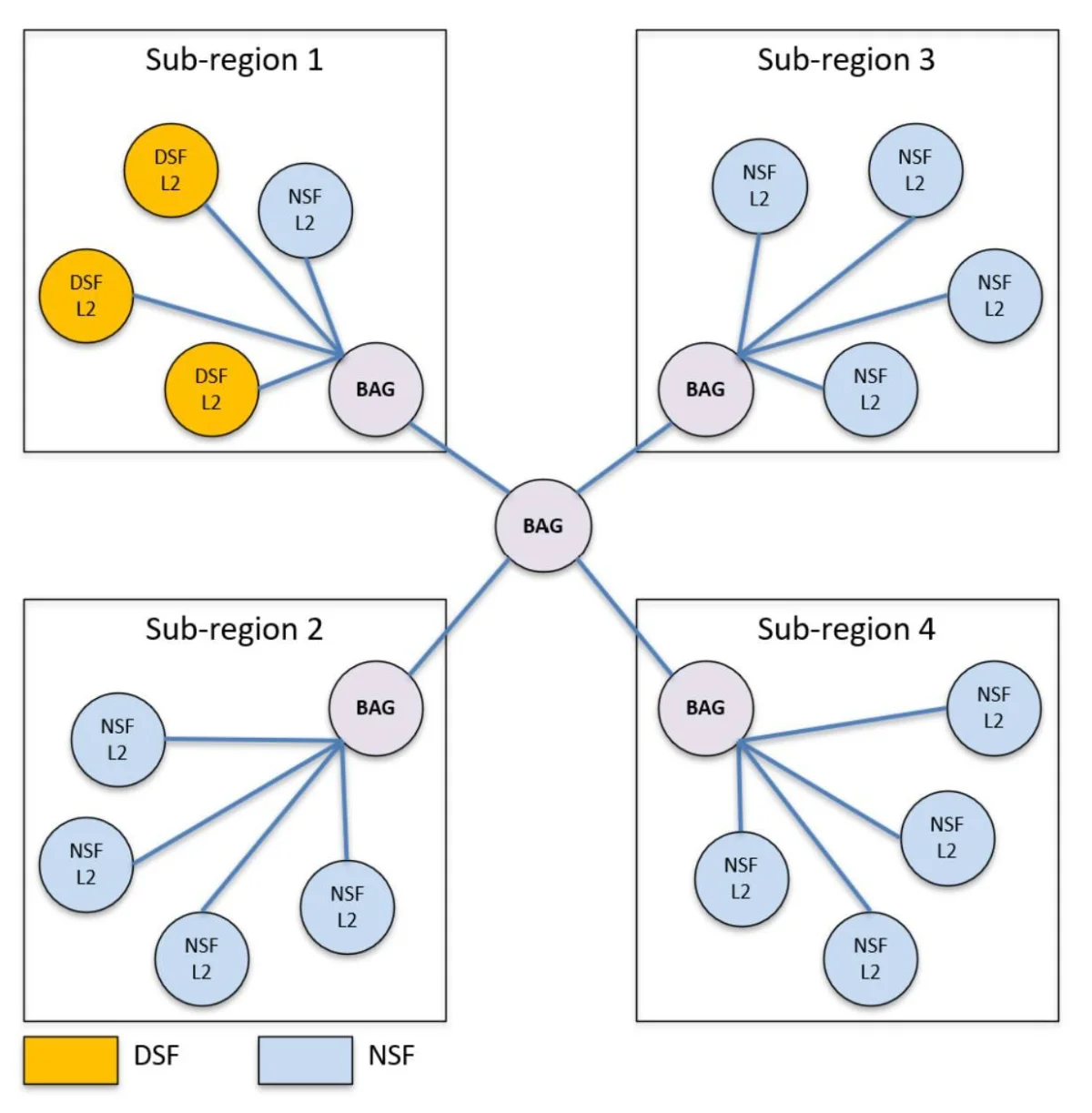
Meta’s backend aggregation (BAG) layer connects multiple spine fabrics into a larger Ethernet network that can span buildings, campuses and regions. The company describes BAG as a petabit-scale super-spine, with capacity between some regional pairs reaching tens of petabits per second. It allows Prometheus to operate as a single cluster across conventional data center buildings, outdoor structures and nearby colocation space. Meta says Prometheus is planned at roughly one gigawatt in 2026, while Hyperion is intended to scale toward five gigawatts.
Long links bring a specific challenge for lossless Ethernet: buffer headroom needs to account for cable length. At distances of tens of kilometers, incorrect buffer allocation can spread congestion beyond the link where it began. Rather than provision every link for a worst-case distance, FBOSS measures cable length in place by timing probe traffic on an uncongested queue, then uses the measured round-trip distance to set headroom.
BAG also needs to account for paths that are impaired but still carrying traffic. Meta uses eBGP link-bandwidth signaling to distribute traffic according to the capacity available on each path. Damping helps keep a single link failure from triggering routing changes across the wider domain. Since inter-fabric latency is several times higher than latency within a fabric, collective communication can slow sharply when its algorithms ignore network distance. Meta is working on adaptive routing to reduce that penalty and scheduling to keep more collective traffic within individual fabrics.
Training jobs are designed to continue when a replica fails: the failed replica is excluded while the remaining replicas keep synchronizing across BAG. Meta’s longer-term direction is to connect training across greater distances, including hundreds or thousands of kilometers, and to support clusters mixing hardware generations and vendors.
SRv6 for the regional backbone
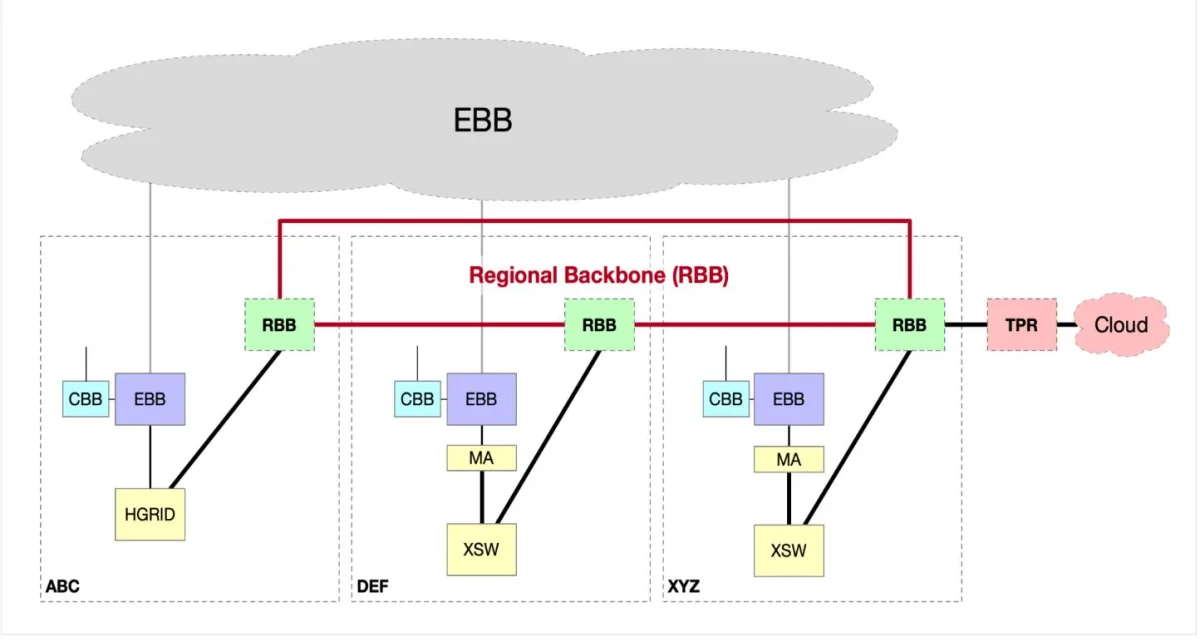
For regional connections, Meta has deployed Segment Routing over IPv6 (SRv6) with FBOSS. The company says this supports flexible traffic engineering and simpler operations as clusters connect across geographies. The backbone runs on open, shallow-buffer switches using Cisco SiliconOne, with additional silicon families being onboarded. FBOSS manages the platforms through OCP SAI.
Ethernet moves into the scale-up domain
Scale-up networks connect accelerators within a rack or pod, where bandwidth and latency requirements have often led to proprietary interconnects. Meta’s OCP work makes Ethernet a larger part of that layer, building on its existing use for scale-out networking.
Tahan connects MTIA 300 accelerators
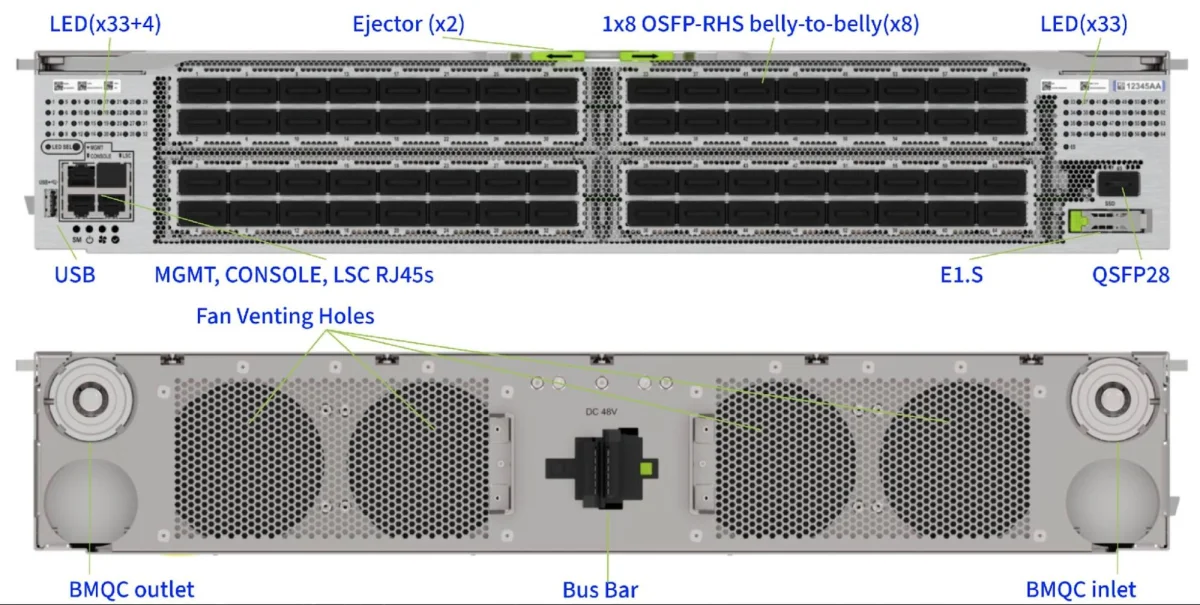
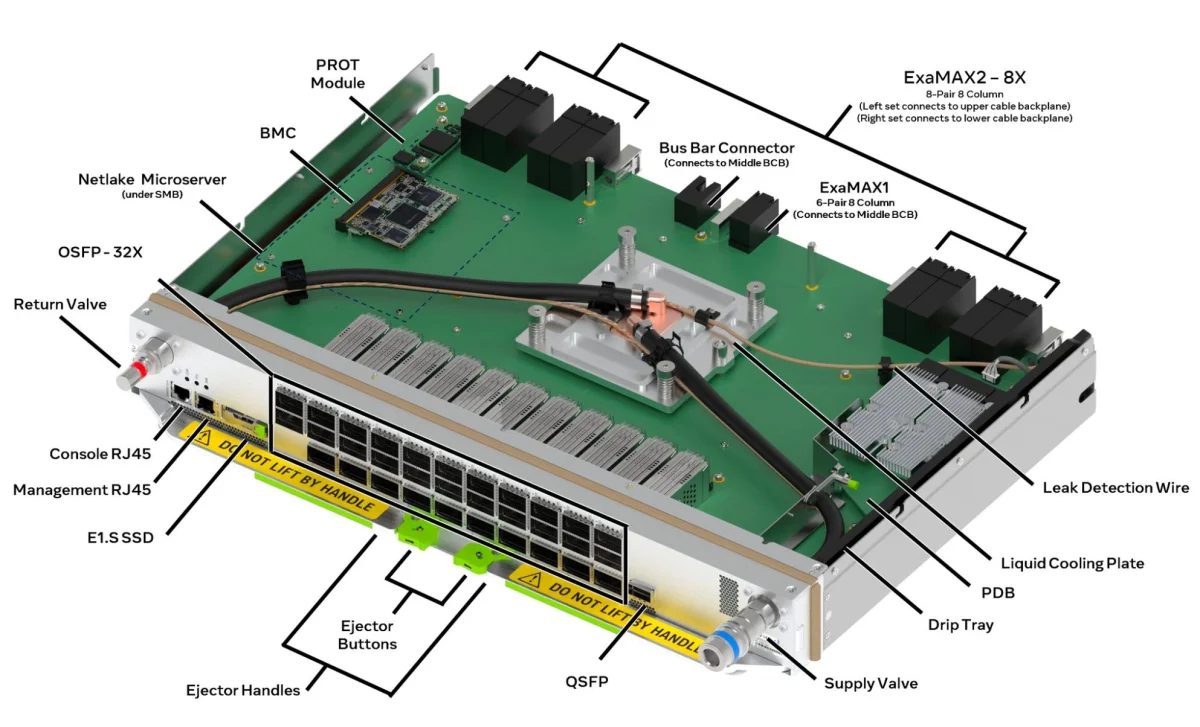
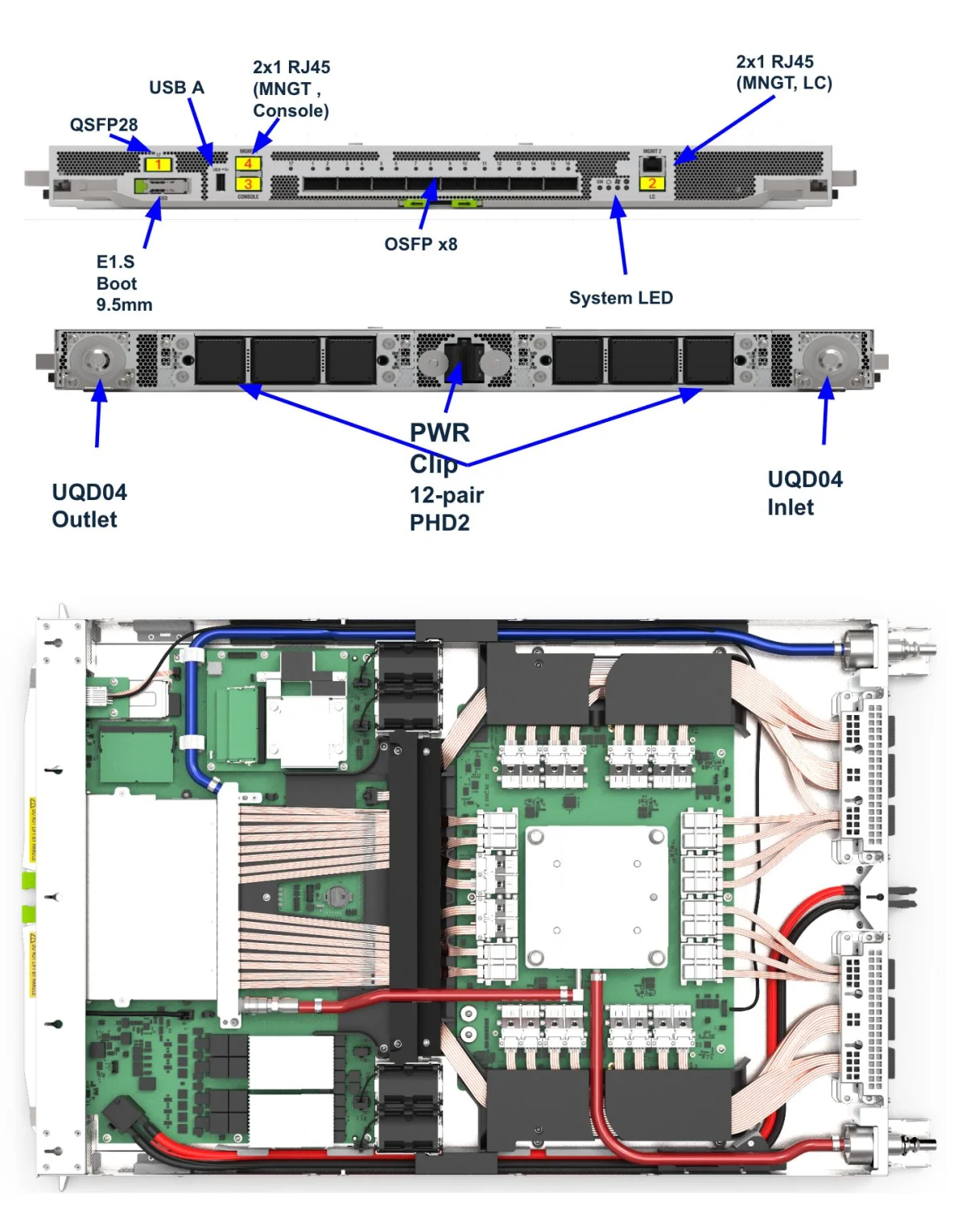
Tahan is Meta’s Ethernet scale-up switch for its MTIA 300 training accelerators. It uses Broadcom’s 51.2 Tbps Tomahawk 5 ASIC, with 64 800G ports. Half the capacity serves accelerator connections through the backplane. Four Tahan switches connect 16 accelerators in a non-blocking topology.
The design reuses the lossless RoCE transport used by Meta’s scale-out fabric, including routed IPv6, Priority Flow Control (PFC) and AI-tuned quality of service. Both scale-up and scale-out therefore sit under FBOSS and share a transport approach. The source describes Tahan as shipping today; its figure caption identifies a 32×800G, liquid-cooled switch running FBOSS.
A 72-accelerator rack is on the horizon
Meta also previewed a scale-up blade using Broadcom Tomahawk 6C silicon. The 102.4 Tbps design has 216 400G ports. Eight switches are intended to connect 72 accelerators in a rack. A future version is planned to use OCP’s ESUN specification as its scale-up data plane, extending open standards into more of the scale-up stack.
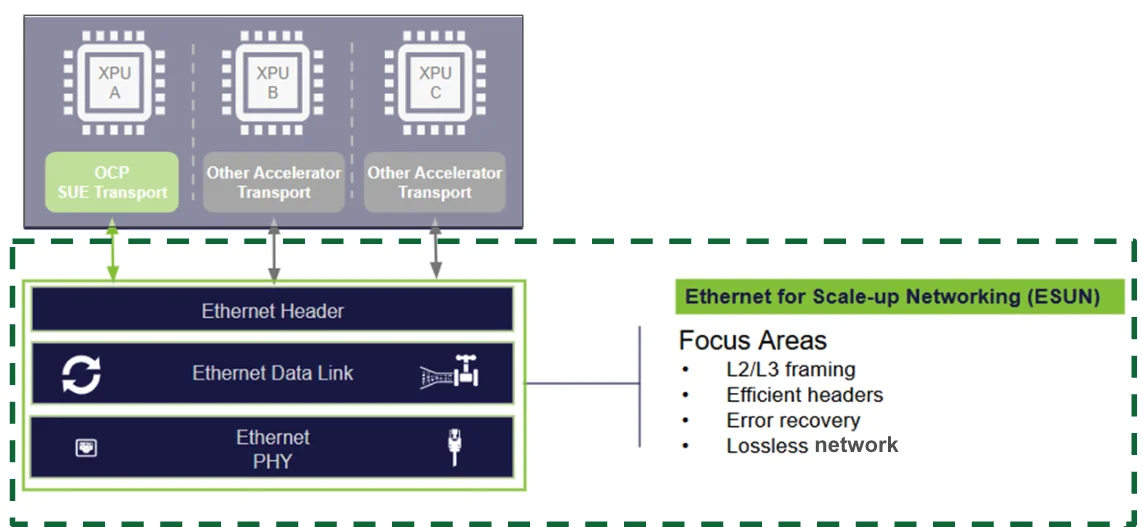
ESUN, started within OCP the previous year, is developing specifications for protocol headers and framing, error handling in lossless multi-hop fabrics, and alignment with IEEE and Ultra Ethernet Consortium (UEC) work. Its ESUN 1.0 Network Operator Requirements Base Specification, published earlier this year, focuses on what the fabric must provide while leaving accelerator and GPU vendors room to choose their implementations. Meta says ESUN 1.1 is nearing completion, with work on switch profiles and reducing inter-packet gaps for low-latency use cases.
Open interfaces from platform to transport
SAI provides a standard interface for switch data-plane software, but the layer beneath it has remained fragmented. According to Meta, bringing up each new switch platform can require months of duplicated engineering, while inconsistent designs add ongoing maintenance and troubleshooting work. That burden matters more as AI hardware cycles shorten.
Meta, Microsoft and Alibaba are co-leading OSPA within OCP. The effort defines shared hardware and software interfaces for switch platform functions: power management and sequencing; sensors, thermal control and fans; inventory and device discovery; out-of-band connections such as management Ethernet, serial console, USB and indicators; firmware updates; and diagnostics. OSPA specification 1.0 has been submitted to OCP.
Meta is also extending FBOSS so switch vendors can onboard their own platforms without relying on Meta engineers for each port. The goal is a self-service path that lets vendors develop compatible hardware in parallel and build on a network operating system already used at large scale. Technical documentation and source code are available through the FBOSS documentation site and FBOSS GitHub repository.
At the transport layer, MetaRoCE is the company’s open-source RDMA protocol for AI networks over Ethernet. It provides congestion control and reliability behavior for the traffic patterns of distributed training, particularly collective communication across large fabrics. Meta is now making implementations available as open-source software, giving infrastructure teams a basis to evaluate and adapt the transport.
Together, IcePack, FPF, BAG, Tahan, ESUN, OSPA, FBOSS and MetaRoCE form a broad effort to make AI networking more open across racks, data centers and regions. The next test is operational: whether shared interfaces and transport behavior can reduce the work of qualifying mixed hardware and cloud environments as clusters grow. Meta is inviting engineers, silicon vendors, integrators and operators to contribute through OCP and its open-source projects.