Sample No. 0111
YouTube Custom Feeds Let Users Shape Their Homepage Recommendations
Custom Feeds add natural language prompts and separate homepage tabs, giving viewers a direct way to steer YouTube recommendations.
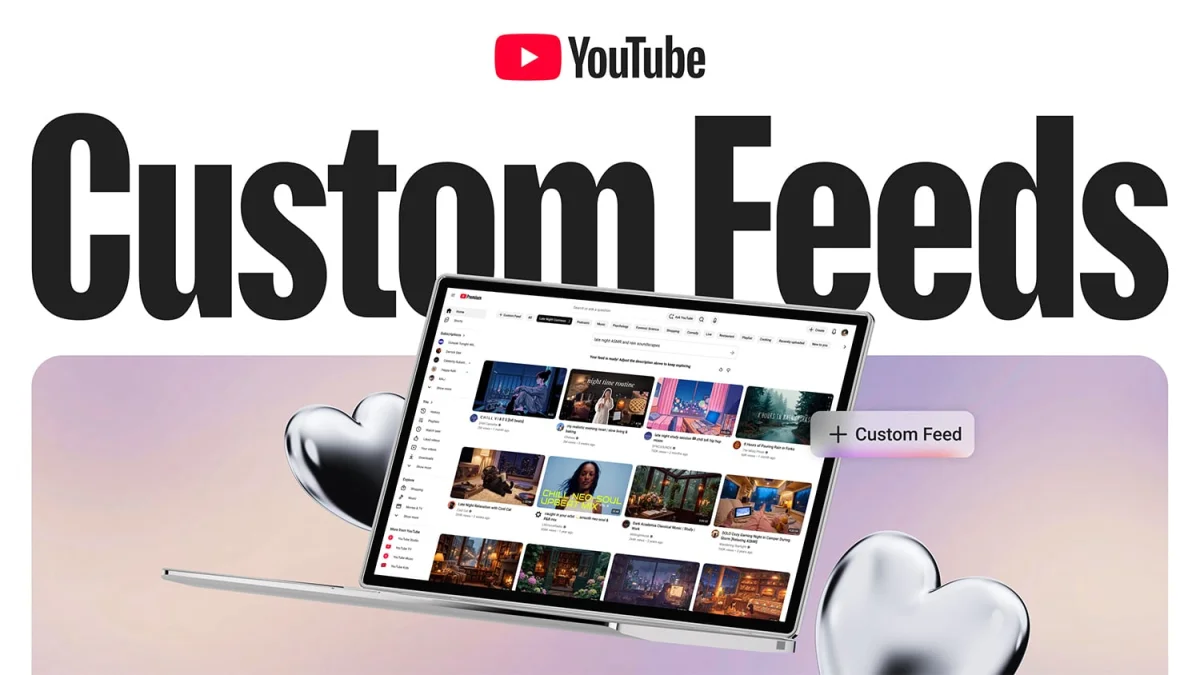
YouTube is giving viewers a new way to steer what appears on their homepage: describe the kind of videos they want, and the service will build a separate feed around that request. The change adds a layer of direct control to a recommendation system that has largely inferred preferences from watch history, subscriptions and other signals.
The feature, called Custom Feeds, was introduced at YouTube’s annual Made for YouTube event. It’s a meaningful change to the homepage experience because viewers can express an interest in their own words instead of relying only on the system to infer it. YouTube’s examples include “long documentaries” and “new DIY creators.” A matching feed then appears in a tab at the top of the homepage.
A prompt becomes a separate feed
Custom Feeds are built around a simple interaction: tell YouTube what kind of content you want to see, and it creates a place for those recommendations. The company says viewers can make more than one feed, each based on a different request. Tabs keep those collections accessible alongside the regular homepage recommendations.
That layout matters. A viewer interested in several subjects can keep them in distinct feeds rather than trying to reshape the entire homepage around a single preference. The standard recommendations remain available, so the feature appears to add another route through the service rather than replace the existing one.
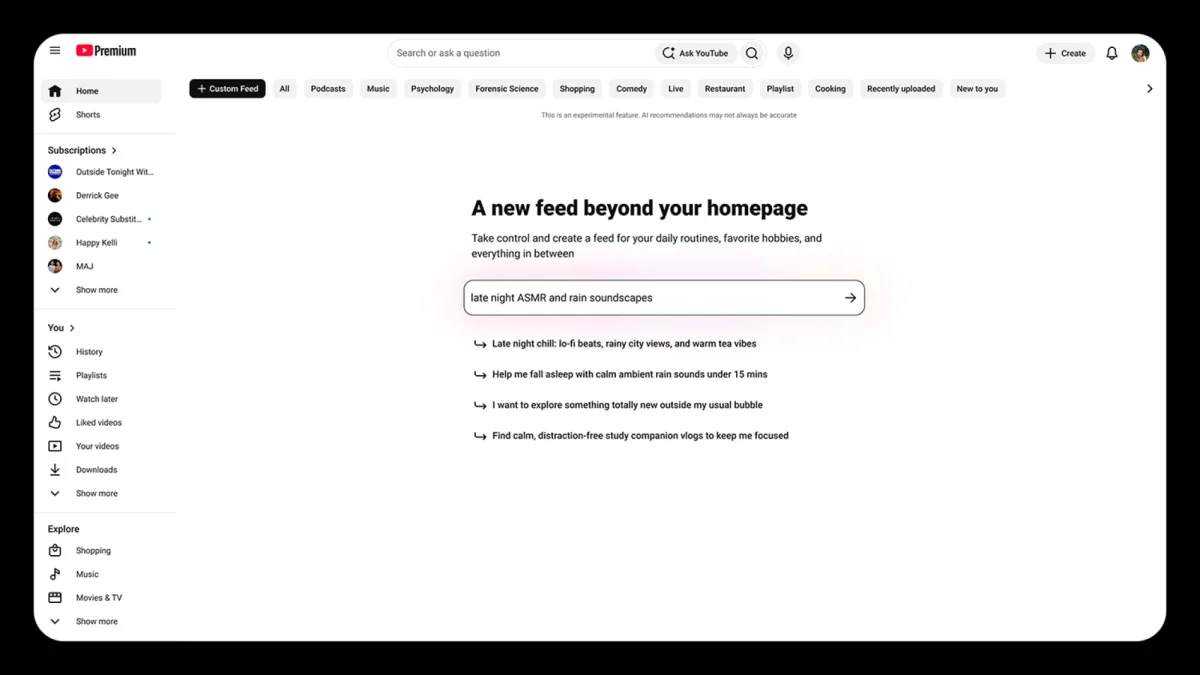
Setting up a Custom Feed
Credit: YouTube
Natural language also makes the request less rigid than choosing from a fixed set of topics. “Long documentaries” describes a format and viewing preference, while “new DIY creators” points toward both a subject area and creators the viewer may not already follow. In principle, that gives people room to describe what they’re after in ways that fit their interests. The source doesn’t explain how YouTube interprets prompts, how much a feed changes over time, or what controls viewers will have if recommendations miss the mark.
More control, with open questions
There’s a practical distinction between asking for a particular video and shaping a recurring feed. A single search starts with a defined question; a Custom Feed is intended to keep presenting relevant videos through its homepage tab. For viewers who return to YouTube for several different kinds of content, that could make discovery feel more intentional while preserving the broad recommendation stream for casual browsing.
But the feature’s usefulness will depend on how well YouTube translates a prompt into recommendations. A broad description can leave plenty of room for interpretation, and the company hasn’t shared details about how feeds are ranked or refreshed. It’s also unclear whether users will be able to adjust a feed with follow-up instructions, or whether they’ll need to create a new one when their interests change. Those details will shape whether Custom Feeds feel like a lasting preference control or simply another set of recommendation tabs.
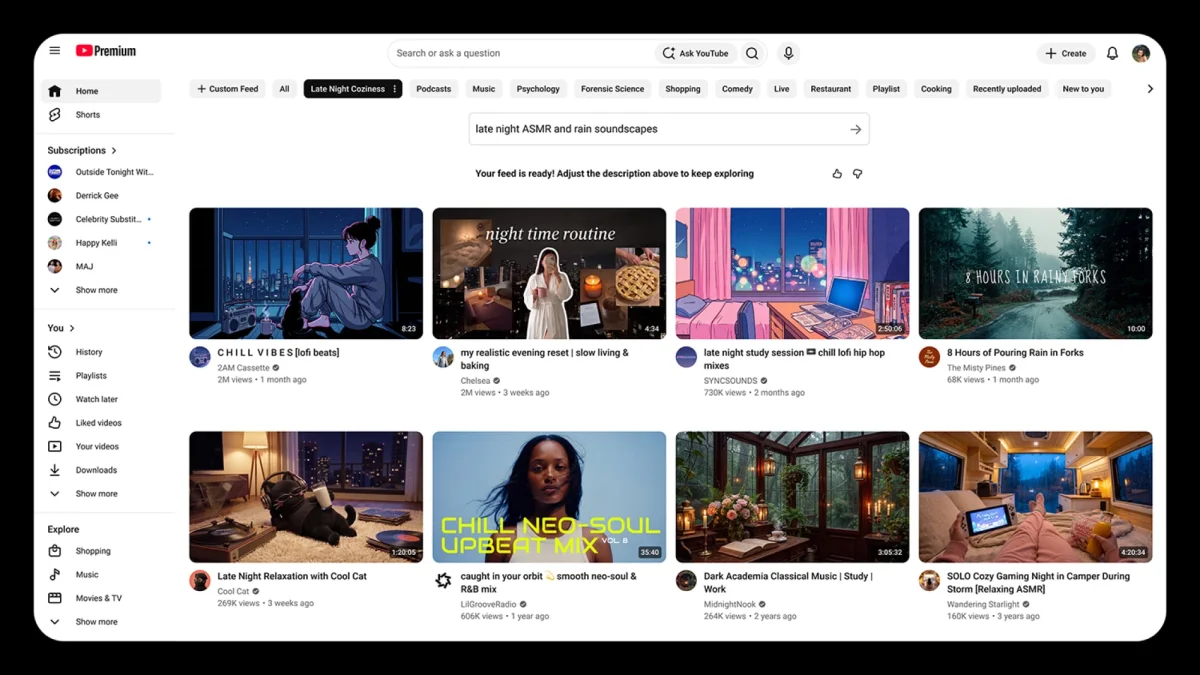
Your Custom Feed is ready!
Credit: YouTube
YouTube says Custom Feeds will begin rolling out to users in the U.S. soon. The company hasn’t supplied a broader availability timeline in the source material. For teams assessing the change, the key question is not just whether a prompt can produce a feed, but whether that feed offers enough consistency and control to be useful across repeat visits.
Other discovery changes
Custom Feeds are part of a wider set of discovery updates. YouTube is also expanding Ask YouTube so viewers can ask questions about products featured in review videos. The feature will provide more information about products and recommend videos that explore product questions in greater depth.
That could help connect a viewer’s question to more material on the platform, though the source doesn’t specify which product details Ask YouTube will draw on or how it will handle gaps in a video’s information. For someone comparing items covered in reviews, the value will depend on whether answers stay tied to what the videos actually show and explain.
The podcast experience is also getting a personalized, AI-generated audio guide. It will introduce a viewer’s podcast lineup and recommend other podcasts and episodes based on their interests. The source doesn’t describe how the guide is generated, when it will appear, or what controls listeners will have over its recommendations. Those implementation details will determine whether it works as a useful summary or mainly as another discovery surface.
Finally, YouTube will recommend Posts from the Shorts feed, and Posts are due to arrive in the service’s TV apps soon. Together, these changes put more types of content into the paths viewers already use to browse. Custom Feeds stand out because they give viewers a direct input into that process. The feature will be worth watching as it rolls out: its promise rests on whether a short natural language request can reliably produce recommendations people want to return to.