Sample No. 0098
AI Influencers: How Synthetic Creators Get Made, Monetized and Challenged
AI personas can earn through ads, subscriptions and brand work, but recycled performances raise questions about originality, consent and creator pay.

The business of AI influencers is no longer just about producing a convincing digital face. It’s about building a distribution and revenue system around that face: character design, short-form video, audience growth, brand promotion and paid subscriptions. The operator may never appear on camera. In some workflows, they don’t even need to shoot the footage themselves.
An AI influencer is a fictional character presented through images or video generated with artificial intelligence. An operator gives the character a name, appearance and social profile, then publishes content in its voice. The persona might look like a model, a lifestyle creator or a stand-up comedian. Its audience can be directed to products, brand work or subscription pages, even though the personality being presented doesn’t exist as a person.
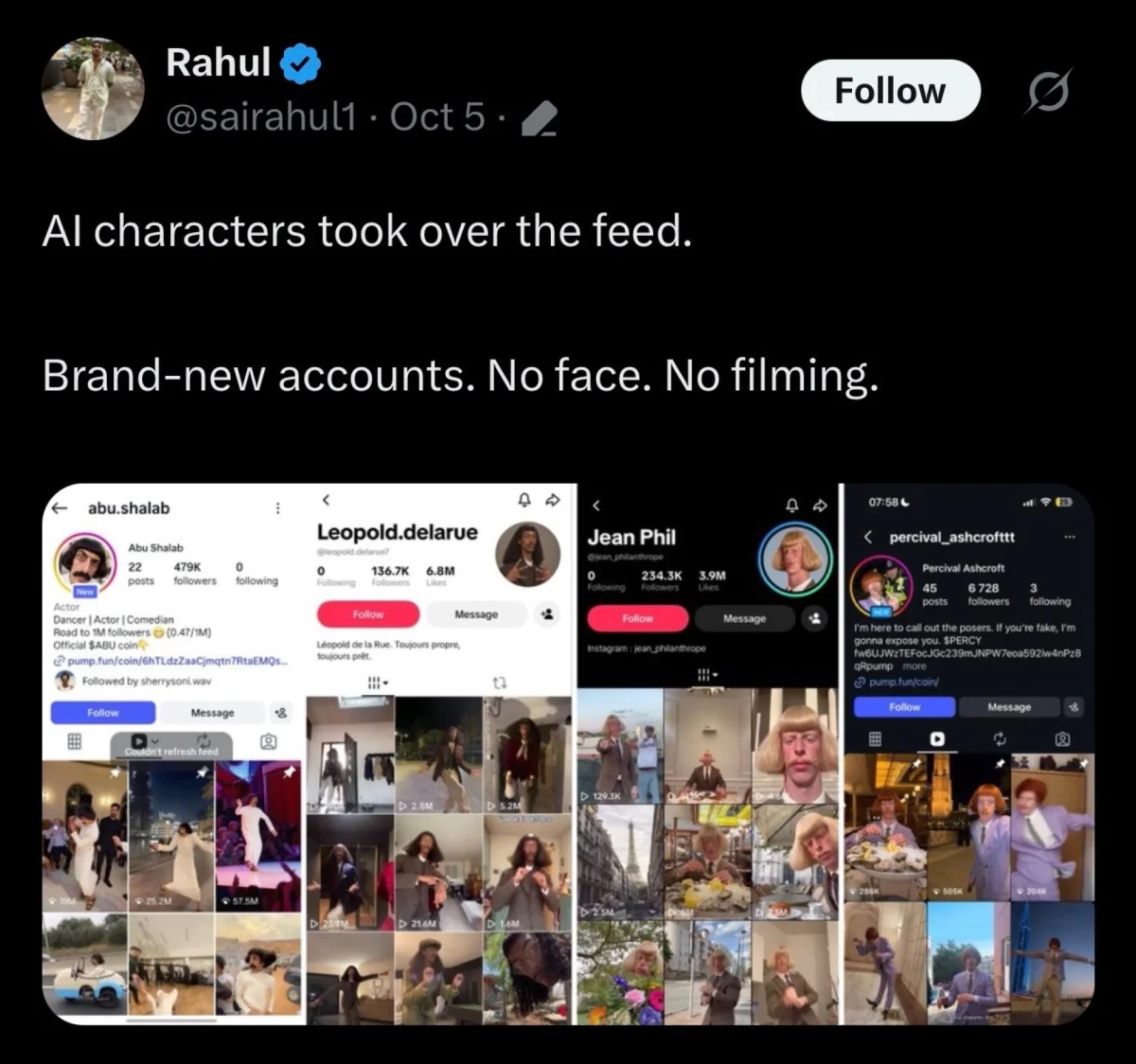
That setup has drawn a wave of tutorials and business pitches. One post likens the opportunity to online retail in 2016, claiming AI characters had earned more than 100 million views in a few days and were easy to make. Another promises a process that takes five minutes. Those claims are promotional, not evidence of reliable earnings. Views can create reach, but reach alone doesn’t guarantee revenue.
The mechanics are accessible enough to make experimentation straightforward. The harder questions come afterward: whether the content adds anything original, how it earns money, and what happens when a synthetic performer borrows a real creator’s work.
From character sheet to short video
Many tutorials begin with character design. The operator sketches out a look and personality, sometimes using Pinterest for visual references and ChatGPT or Claude to develop the concept. They then create a “character sheet”: reference images showing the same fictional person from multiple angles. That consistency matters. Without a stable visual guide, the character may change from shot to shot, weakening the impression that viewers are following one persona.
Those images can be fed into a video-generation tool such as Higgsfield’s Genjutsu, along with a source video. Some tutorials suggest taking a popular clip and asking the software to replace its performer while retaining the original movement, framing, lighting and color treatment. One example prompt asks the tool to swap the person in a video for the character in a reference image while keeping the camera movement and overall look.
“replace the person in @ video1 with the character from @ image1. keep the same motion, camera movement, color grading, lighting, framing, and overall video quality.”
That approach makes production faster, but it also creates a direct path for copying someone else’s performance. Other workflows start with newly shot footage. Higgsfield describes filming movements on a phone and using Genjutsu to transfer them to a digital character, with the tool handling elements such as wardrobe, set and grading. Its AI Influencer builder lets users select traits including age, ethnicity, hairstyle and body proportions.
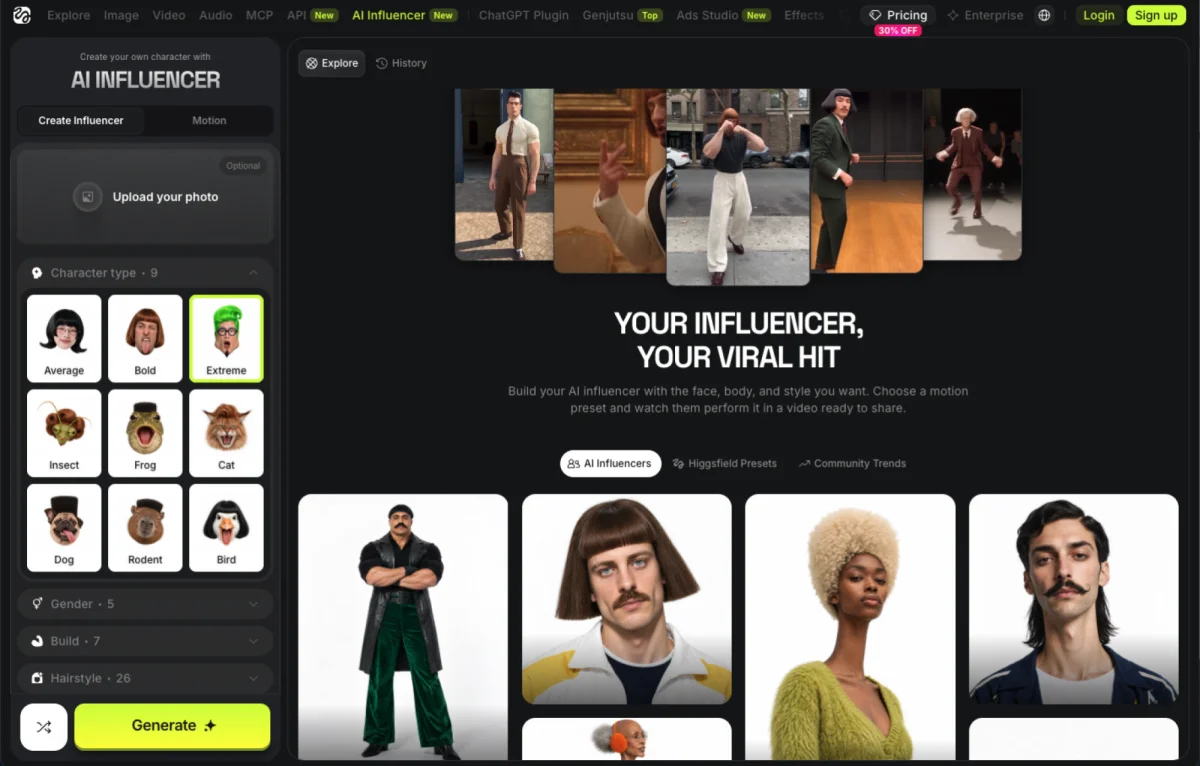
Other services fill in different pieces. HeyGen makes talking avatars, while ElevenLabs generates speech. Combined, these tools can give a fictional character a consistent appearance, movement and voice. They don’t, by themselves, solve the creative problem: someone still has to decide what the character says and why an audience should care.
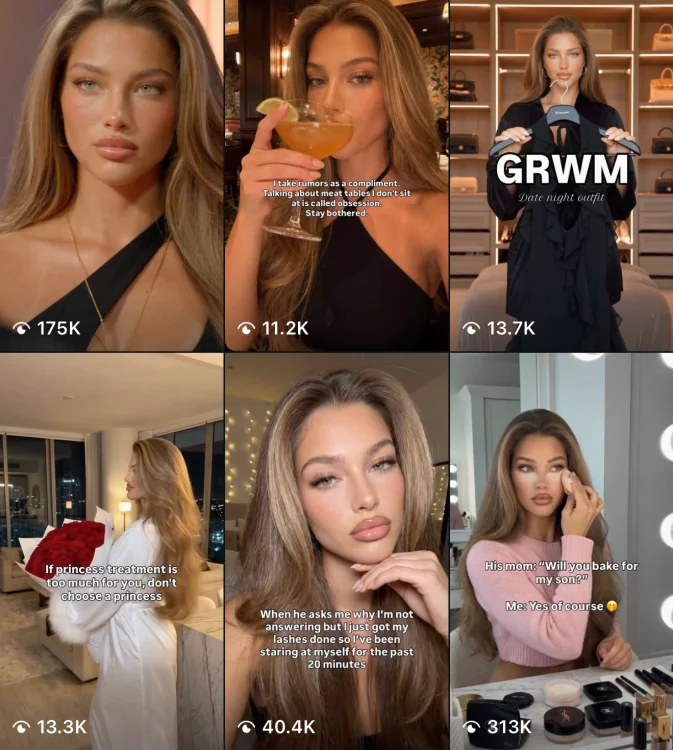
AI personas have appeared across comedy, fashion, beauty and fitness. Comedy accounts include Abu Shalab, Leopold Delarue, Jean Phil and Percival Ashcroft. In fashion and beauty, imma appeared in an SK-II skincare ad, while Shudu featured in Balmain’s “Virtual Army.” Hazel Delarose posts dating and “get ready with me” material. Lil Miquela, a fictional personality with 2.2 million followers, has appeared in a BMW promotion.
Views are only the top of the revenue funnel
For an AI creator, attention can lead to several kinds of income, but there’s no fixed payment attached to a view count. Platform monetization is one route. On YouTube, eligible channels share in advertising revenue through its Partner Program. For Shorts, ad revenue is pooled and allocated according to each creator’s share of eligible engaged views. AI videos may qualify, but the channel must meet the program’s originality requirements. YouTube says generic or unoriginal AI templates that appear mass-produced without meaningful creator perspective aren’t eligible.
TikTok’s Creator Rewards Program pays eligible creators for original, high-quality videos longer than one minute. On TikTok and Instagram, a short AI clip may attract a large audience without directly earning money. That’s why some operators treat free posts as the opening step in a sales path: the profile sends viewers to paid content or other offers.
Subscription services can turn an audience into recurring payments. Some profiles link to OnlyFans or Fanvue, where creators can charge for subscriptions, individual posts and messages, or accept tips. Fanvue explicitly allows AI creators. A free feed can therefore serve as advertising for content behind a paywall, rather than as the product itself.
Some AI personalities also sell instruction on building similar accounts. Aitana López, an AI fitness and lifestyle persona with more than 400,000 Instagram followers and 1,000 YouTube subscribers, directs followers to the AI Creator Aicademy on Skool. Its page describes lessons on creating and positioning an AI avatar, making content and developing advertising work, and lists a price of $9 a month. The model is self-referential: an AI persona can earn attention by teaching people how to create AI personas.

When a synthetic persona borrows a real performance
The risks become more concrete when an account uses a real comedian’s material to attract viewers. “Tiffany Sloane,” an AI character posting as @tiffany.bbyx, had about 377,000 followers and 118 posts as of Oct. 6. Its first post appeared on Sept. 11. The character showed up in generated sitcom scenes and stand-up clips, with videos ranging from tens of thousands of views to millions. The profile described Tiffany as an actress and disclosed that she was AI-generated, though that disclosure changed while the story was being written.
The profile’s highlights linked to an OnlyFans page whose bio said, “19, and yeah, the body’s real.” Who ran that page, and whether it featured a real woman, wasn’t confirmed. The Instagram account later appeared to have been deactivated. The uncertainty illustrates how a synthetic identity can lead viewers toward a separate page whose connection to the fictional character may be unclear.
Comedian George Brett Olsen said Tiffany’s clips reused his joke, outfit and gestures. In an Oct. 4 Instagram video, he compared his own performance with the AI version and said, “AI stole my joke and outfit!” He also described difficulties reporting the content, saying people had tried without success. His concern wasn’t only that a joke had been copied; the clip could draw an audience to an account built around a performer who never made the joke.
Other comedians have described similar cases. An AI performer called @aylenskye3000 used material by Olivia Carter about asking out her personal trainer. Carter had performed the joke on Netflix and The Tonight Show. She told Gizmodo that the account had blocked her, so she initially couldn’t view one of the clips. Material by Sarah Purdum and Julia Jasunas was also identified in videos from an account linked to a Fanvue profile with close to 5,000 likes.
Purdum said she knew of one instance involving her work and had heard other comedians discuss similar experiences, particularly women. “I feel annoyed that my work is being taken for the purpose of drawing in men,” she told Mashable, adding that the jokes were being paired with unrealistic bodies. The imagery can be part of the sales strategy: exaggerated proportions and revealing outfits help catch attention, which can then be directed toward subscriptions or other paid offers.
That pattern raises a broader concern about representation. Sara Ziff, founder and executive director of the Model Alliance, warned that idealized digital people could narrow rather than broaden perceptions of beauty, according to the New York Times. A synthetic body can be designed without the limits of a real person’s body, but the images still circulate among real audiences and creators.

Fictional talent, real production businesses
Not every synthetic personality is assembled by an individual chasing views. Agencies are building and managing fictional talent for advertising and entertainment. The Clueless represents Aitana López as a 26-year-old Barcelona native with a sporty style and bold attitude. The character has appeared in an Amazon Black Friday promotion, and the agency says she has worked with brands including L’Oréal and Coca-Cola.
Other firms are creating larger rosters. Inception Point AI says it has more than 100 characters covering subjects such as gardening, cooking and celebrity gossip. The characters are intended to host podcasts, appear in videos and interact with followers. In an August interview with the New York Times, CEO Jeanine Wright said the company expects audiences to accept AI-made content if they enjoy it. Andreea Petrescu, co-founder of AI marketing agency Seraphinne Vallora, described the appeal as the ability to design a character from scratch.
That’s the commercial promise: teams can shape a persona to fit a brief and produce content without coordinating a human performer’s schedule. But a controlled character still needs a point of view and material worth watching. And when a production process uses a real person’s footage, writing or likeness, production speed doesn’t answer whether that reuse was wanted.
Platforms have taken different approaches to synthetic content. Fanvue permits AI material while barring deception and infringement of ownership rights. OnlyFans requires content to clearly feature the verified creator and be identifiable as AI. Meta adds “AI info” labels, TikTok introduced an AI-labeling tool in 2023, and YouTube began rolling out a disclosure tool in 2024, with updates the following May. These labels can help audiences identify realistic synthetic media, but they don’t explain where a performance came from or whether the original creator agreed to its reuse.
TikTok also bars certain synthetic depictions, including likenesses of people under 18 and adult private individuals used without permission. In August, a TikTok source told Mashable the company was testing “AI Cast,” a tool for making an “AI Self” that can appear in generated videos. The company said it was testing ways to help protect people’s AI likenesses. YouTube, meanwhile, clarified in July 2025 that repetitive or mass-produced material can’t earn money through its Partner Program.
For creators, the practical test is not simply whether an AI character can go viral. It’s whether the account can build durable value without depending on copied performances, unclear identities or a stream of interchangeable clips. As synthetic production gets easier, originality and attribution—not just visual realism—will determine which accounts can keep audiences and monetization access.