Sample No. 0095
New York Comic Con Turns Its Floor Into a Creator Production Space
NYCC is building creator access into its layout, with filming space, live coverage and practical support for attendees making convention content.

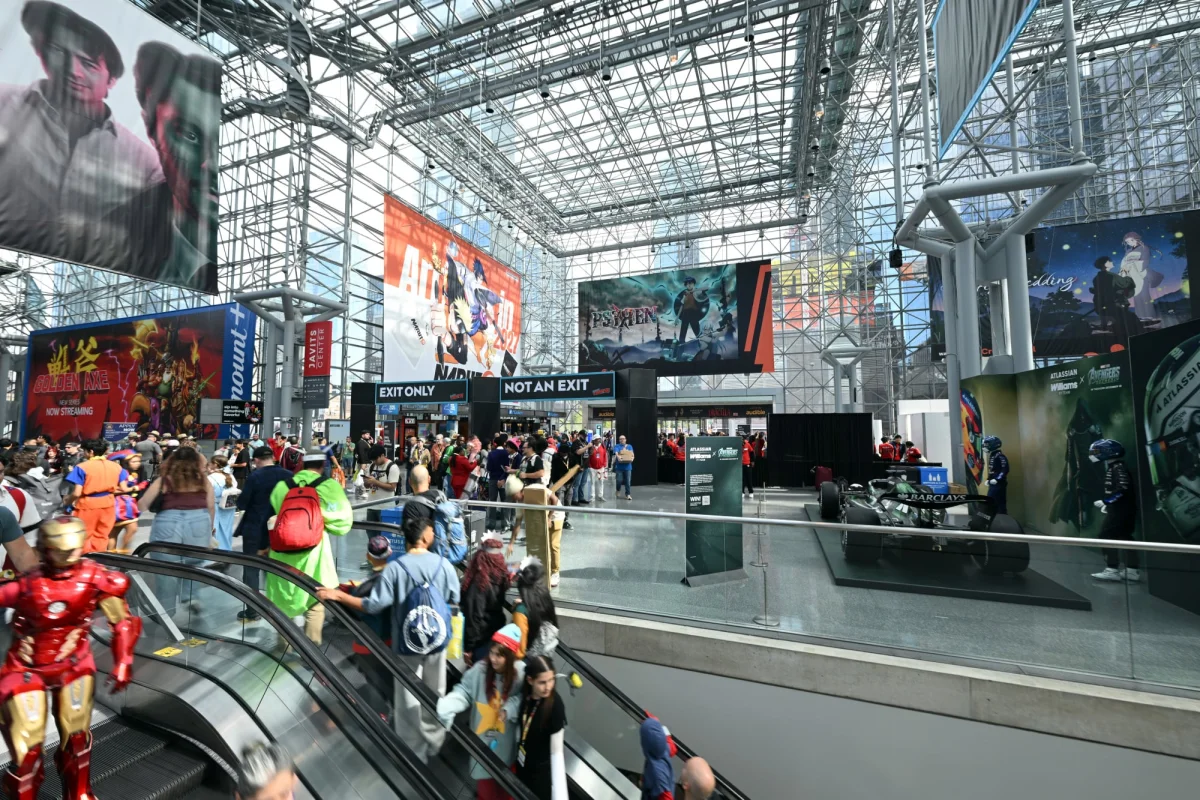
New York Comic Con is shaping its venue around the cameras attendees bring with them. At the Javits Center, photo-ready banners, a dedicated creator lounge and expanded livestream coverage reflect a change in what a convention does: it still gathers fans around shared interests, but it also gives them places and tools to turn those gatherings into online media.
The shift has practical consequences for the event itself. Creators need a place to record, edit, charge equipment and meet collaborators; organizers want the convention’s activity to reach people who aren’t in the building. NYCC is responding with space and access designed for both. The result is a show floor where fandom and content production overlap, sometimes for the same person at the same time.
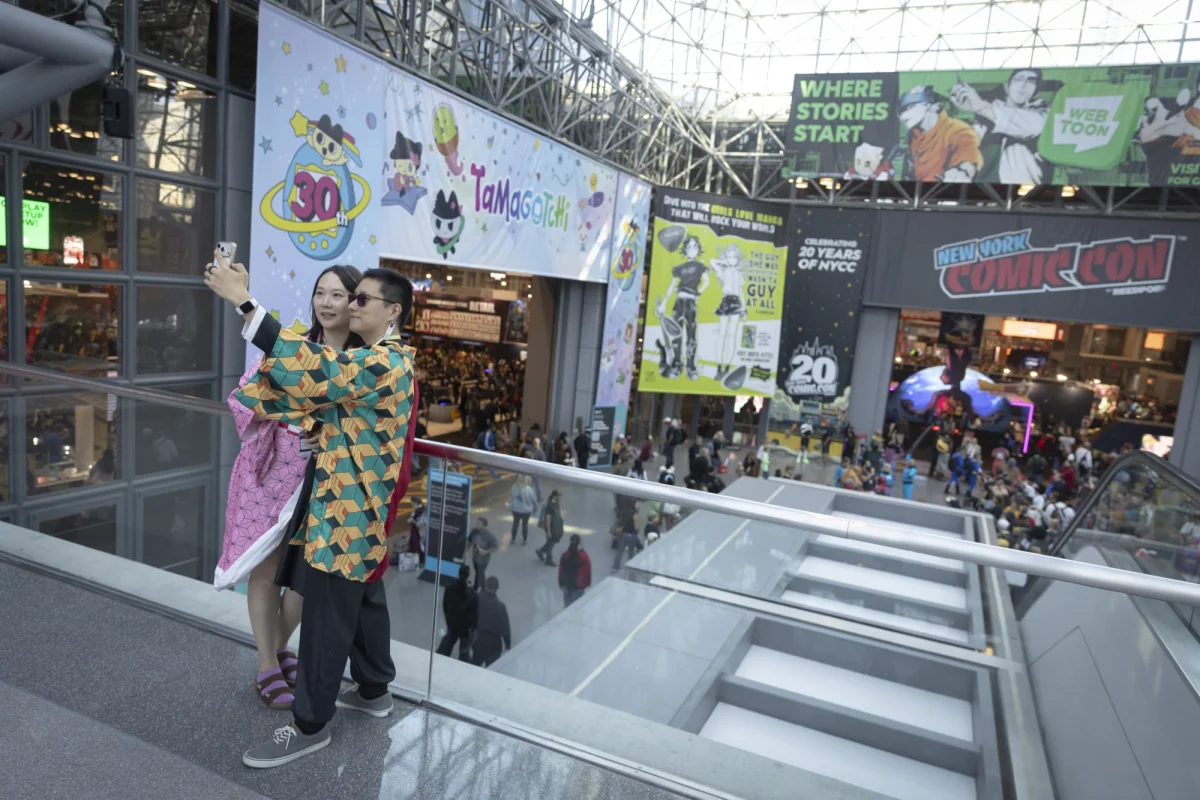
At the Crystal Palace entrance, banners for properties including Tamagotchi, The Apothecary Diaries and YAGA also serve as backdrops. NYCC’s organizers planned the lower sections with photos and video in mind, anticipating that attendees would share the scenes on platforms such as TikTok. That detail points to a broader design choice: the venue itself is becoming part of the production setup.
New York Comic Con’s creator lounge makes that approach more concrete. The room overlooks the crowds, offers dedicated Wi-Fi and space to film and edit, and gives creators a place to recharge. It acknowledges that people arriving with cameras and microphones may be doing more than documenting a personal visit. They may be producing work for established audiences, and treating the convention as a key date on their professional calendar.
Creator access becomes part of the event
NYCC’s creator program began to take shape in 2021, as live events returned and short-form video was changing how audiences found pop culture. The convention invited two creators to run its TikTok account during the show. Marketing director Fallon Prinzivalli said the effort reached more than 8 million people in four days. “We started engaging with them very intentionally following the pandemic when live events were coming back,” she told Mashable.
From there, the arrangement grew into a more formal program. Creators had been applying for media credentials even when their work didn’t fit traditional editorial categories. NYCC began treating them as a distinct group, with dedicated badges and, later, a lounge. The logic is straightforward: creators can bring attention to the convention and its exhibitors through formats and communities that differ from conventional event coverage.
The program remains selective. NYCC offers a limited number of complimentary creator badges, and its published guidelines call for at least 200,000 followers across platforms. Prinzivalli said the team also considers smaller creators by looking at their communities, originality and impact. Thousands applied this year; submissions closed in August when the convention reached capacity. Prinzivalli did not say how many badges were issued.
Follower counts alone don’t explain why the lounge matters. Creators need reliable connectivity, charging points and a place to work between sessions on a crowded floor. They also need to find one another without spending the day arranging meetings across a sprawling venue. Prinzivalli said the lounge was intended to put creators “in the middle of the energy” while giving them room to film, connect and catch their breath.
Planning the work without missing the show
For New York City creator Kallen Zborovsky-Fenster, NYCC ranks among the biggest events on his content calendar. He spends weeks preparing interview topics and equipment, adapting his usual home recording setup for use on the convention floor. This year, he planned interviews with creators and attendees about subjects ranging from Avengers: Doomsday to the state of the DC Universe. “This is one of my highest priority events,” he said.
The lounge gives him somewhere quieter to record, charge gear and meet people working in entertainment. But he still wants to spend time among attendees: “I want to go where the people are.” That tension is built into creator work at a convention. A controlled room helps produce cleaner interviews, while the unpredictable crowd is often where the most distinctive moments happen.
Caroline Martini, who posts cosplay and convention videos as @newyorkcaroline, prepares differently. She keeps ideas and planned shots in the Notes app on her iPhone and makes some of her own costumes, including an Éowyn outfit from The Lord of the Rings. Her footage can become TikToks, Instagram Reels and YouTube Shorts, while her convention vlogs may take until the next day to publish.
For Martini, documenting a day she enjoys can make it harder to stay present in it. She likes the lounge’s lighting and photo opportunities, but spends little time there because many of her friends don’t have creator badges. Her choice captures a limit of building a convention around production: a useful workspace doesn’t replace the social experience that brought many attendees there.
A meeting place and a reporting desk
Creator access also gives people a way to build working relationships. Zborovsky-Fenster, a Columbia University student interested in entertainment production and law, returned for his second year with a creator badge. During the application process, he sent several emails with examples of his previous work and ideas for the new convention. The badge lowers the cost of attending, while the connections can lead to collaborations and a wider professional network.
Dominique Little, who posts vlogs and dance videos for 1.8 million TikTok followers as @nojill, uses the lounge to find collaborators. A dedicated meeting point can make it easier for creators to film together and appear in one another’s videos; tripods are available for those who need them. The basics matter, too. Wi-Fi, outlets and somewhere to sit support the unglamorous cycle of recording, editing and uploading.
For Brandon Bullock, who covers anime news as Anime News Guy, timing is central. He films on the show floor, then heads to the lounge to edit and publish while convention news is still fresh. He calls himself a reporter, though he’s also part of the creator program. The categories increasingly overlap: creators interview guests, cover entertainment news, livestream and build media brands of their own.
Prinzivalli has also seen creators recognized by fans while walking the floor. Some are stopped for photos, a familiar sign of how an online audience can shape an in-person event. At NYCC, a person may be a fan, a journalist and a recognizable face to other attendees in the same afternoon.
Designing moments for audiences beyond the venue
That overlap now affects NYCC’s physical design and programming. “We’re very conscious that everything we create now is a shareable moment,” Prinzivalli said. Alongside the entrance banners, the approach extends to sponsor displays, signs and the arrangement of the show floor.
NYCC has also expanded its livestream production. The coverage includes broadcasts from major stages, roaming segments from the floor and a River Pavilion studio where casts and creatives are interviewed between panels. Hosts this year included experienced journalists and people with established online audiences, among them creator and podcast host Brandon Davis. These formats extend the convention’s reach to fans who can’t attend in person.
The relationship runs in both directions. Online communities help fans discover one another and bring them together at the convention. The event then supplies shared experiences, conversations and images that travel back into those same communities. Digital fandom gets a physical meeting place; the meeting place gets a much larger audience.
That model also makes creators more visible to event organizers and entertainment companies. Zborovsky-Fenster sees that recognition as a sign that creators are becoming more influential in how audiences get information about pop culture. For NYCC, the next question is how to keep the practical support useful as creator demand grows, while leaving room for attendees to enjoy the convention without turning every moment into a shoot. The camera-ready venue is now part of the show; the balance between making content and experiencing it will shape what comes next.