Sample No. 0090
A Seven-Year Nighttime Trampoline Habit Shows the Value of Joy Without a Goal
TikTok creator @whatifimjustagirl says she jumps on a trampoline most nights because she loves it—not to optimize sleep, fitness or productivity.
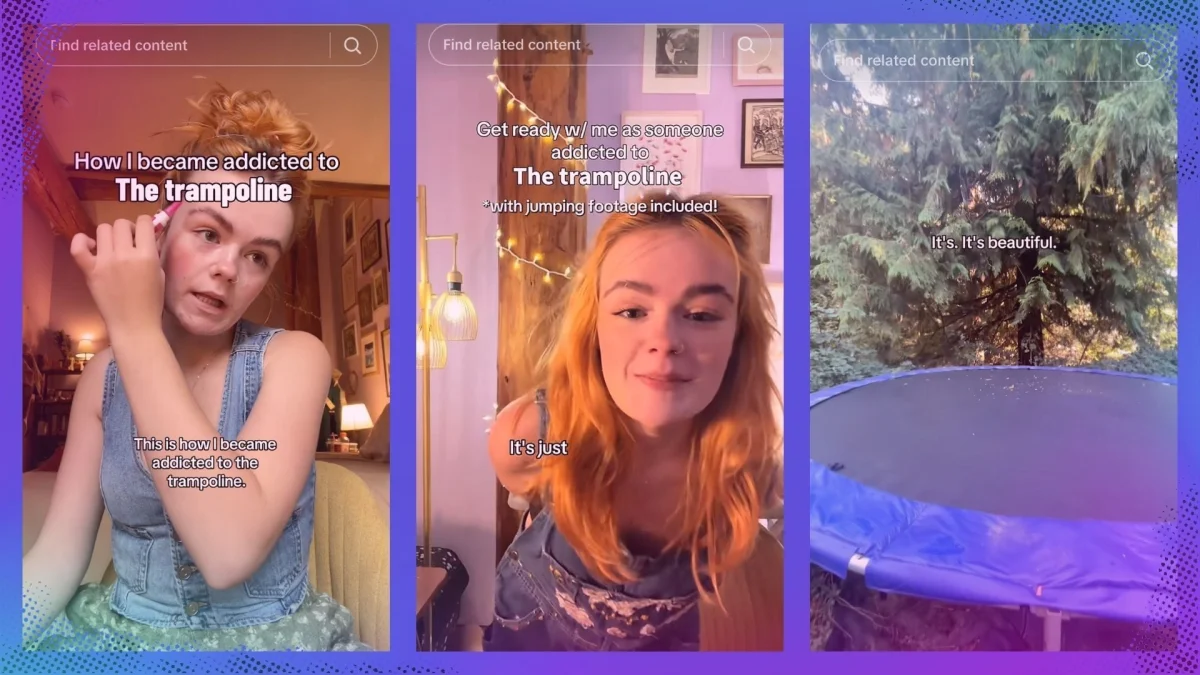
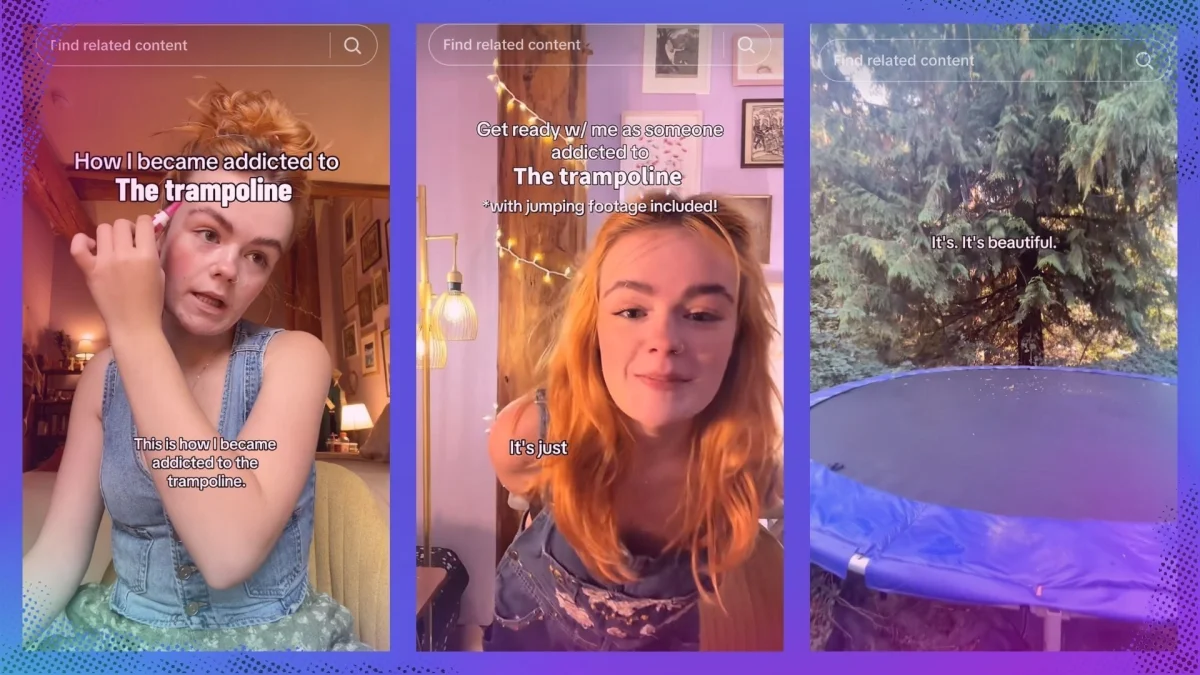
A nighttime trampoline routine that has lasted seven years offers a useful counterpoint to the idea that every hobby needs a measurable payoff. TikTok creator @whatifimjustagirl says she spends nearly every night jumping outside, often between midnight and 3 a.m. She isn't describing a training plan or a sleep technique. She says she does it because she looks forward to it.
That distinction is what makes the routine compelling. Fitness and wellness advice often frames activities as tools: exercise to improve a metric, meditation to manage stress, or a bedtime routine to sleep better. Her trampoline sessions don't need to justify themselves that way. The activity itself is the point.
This Tweet is currently unavailable. It might be loading or has been removed.
A routine built around enjoyment
In a recent TikTok video, she says, “I look forward to it every single day.” The habit has enough staying power to become part of her regular life, but she doesn't present it as a demanding challenge that others should copy. That's a meaningful difference: an activity can be valuable to the person doing it without being a prescription for everyone else.
She has also worked out a practical setup for being outside at night. Her clothes vary with the weather; for colder evenings, she says, she rotates between a few options, including leggings and a flannel. Headphones are part of the arrangement, too. These details make the habit sound less like a dramatic stunt and more like a personal routine she has adapted to suit herself.
This Tweet is currently unavailable. It might be loading or has been removed.
The timing is unusual, and it won't fit every household. Someone considering an outdoor nighttime activity has to account for their surroundings, available space and the people nearby. A trampoline also isn't an option for everyone. But the useful takeaway isn't that people should start jumping at 2 a.m. It's that a hobby doesn't have to look efficient or conventional to earn a place in someone's day.
Enjoyment isn't a diagnosis
The videos have also drawn speculation about the creator's mental health. In another video, she responds to commenters who assumed she was autistic. She says she isn't autistic and shares that she has OCD, which she says plays a role in her attachment to trampoline jumping.
Her distinction matters: she acknowledges that OCD affects the intensity of her interest, while also rejecting the idea that it fully explains why she jumps. “Yes, is my obsession with the trampoline a little extreme? Yes. Does my OCD play a factor in that? Yes, but that's not why I jump,” she says. She adds that she doesn't think the activity needs a diagnosis.
That is her account of her own experience, not a basis for drawing conclusions about someone else's health from a video. A repeated interest, an unusual schedule or visible enthusiasm can't tell viewers what is happening in another person's mind. Here, the creator has chosen to explain some of the context herself, while making clear that enjoyment remains central to the routine.
Social platforms can turn an idiosyncratic habit into a prompt for armchair analysis. The attention may make an ordinary personal detail seem like a puzzle that needs solving. But sometimes the most accurate explanation is also the simplest one: she likes jumping on a trampoline. The fact that a routine is intense doesn't automatically make it a performance, a productivity method or a symptom for an audience to interpret.
This Tweet is currently unavailable. It might be loading or has been removed.
A small reminder about hobbies
Many adults leave trampoline jumping behind after childhood. This creator has kept it in her life for years, not by turning it into a business or announcing a self-improvement system, but by continuing to do something she enjoys. That kind of consistency is easy to overlook because it produces no obvious scorecard. There may be no milestone beyond wanting to do it again tomorrow.
That makes the story a modest corrective to the pressure to make leisure productive. Hobbies can become another source of targets: track the minutes, improve a skill, build an audience, or find a way to earn from the effort. Those goals can suit some people. They aren't requirements. Enjoyment that doesn't need to be monetized or optimized can be reason enough to keep an activity.
There's a practical point here for people searching for a routine that sticks: an activity someone genuinely anticipates may be easier to maintain than one chosen only because it sounds impressive. That isn't a guarantee, and one person's late-night habit won't translate directly to someone else's life. But it does suggest a better starting question than “What should I be doing?” Try asking what you actually enjoy enough to return to.
Her trampoline isn't a universal answer to happiness, and the videos don't establish that jumping improves sleep or mental health. They show something more personal: a woman has found an activity she looks forward to, and she has continued it for seven years. For all the attention paid to routines with elaborate rules, that may be the clearest lesson—make room for something you like simply because you like it.